
Northern Nigeria is a land of captivating contrasts where ancient history meets breathtaking landscapes, and vibrant cultures blend with warm hospitality. You know how you grab your bag and head out looking for something fun? You can do that here. Imagine wandering through the time-worn gates of Kano’s city walls, marveling at the fiery sunsets over the Sahel, or feeling the cool mist of waterfalls hidden in lush highlands. From bustling markets brimming with handicrafts to serene deserts dotted with rocky formations, this region is a treasure trove of discovery.
In this guide, we’ll unveil 25 must-visit spots that showcase the very best of Northern Nigeria. Whether you’re a history buff eager to explore centuries-old palaces, an adventure seeker chasing rugged mountain trails, or a foodie ready to savor local delicacies, you’re in for an unforgettable journey. Pack your curiosity (and your camera)—it’s time to explore the North like never before!
You know how you grab your bag and head out looking for something fun? You can do that here. You’ll find hills, parks, rocks, and more. You’ll meet friendly people and learn cool stories about each spot. You’ll see animals roam free and taste local meals by a waterfall.
You’ll feel right at home exploring. You can hop on a jeep or take a short bus ride. You can camp under the stars or stay in simple lodges. You’ll find guides who share local tips and point out hidden gems.
By the end, you’ll know 15 great places that make Northern Nigeria sparkle. You’ll have stats on park sizes and heights. You’ll pick up easy advice—when to go, what to pack, and what to watch for. Let’s set off!
Below is the full list of 25 Places to Explore in Northern Nigeria, with entries 1–15 rewritten as three-paragraph descriptions and entries 16–20 carried over from before. Entries 21–25 add five new spots. Each entry highlights what to see, practical tips, and context to help you plan your trip.
READ ALSO: Top 12 Major Tourist Attractions in Nigeria
Places to Explore in Northern Nigeria
1. Yankari National Park, Bauchi State
Yankari National park spans roughly 2,244 km² of Sudanian savanna in Bauchi State, making it one of Nigeria’s largest wildlife reserves. You’ll find natural hot springs, including the famous Wikki Warm Springs (31 °C year-round), perfect for a post-safari dip.
Early-morning game drives let you track elephants, buffalo, warthogs, and over 350 bird species across open plains. Guides from nearby Wikki Camp share insights on animal behavior and park history.
Staying on-site at rustic lodges or camping under the stars keeps you close to the action. Pack light, bring insect repellent, and plan for harmattan haze between December and February.
2. Gashaka-Gumti National Park, Taraba/Adamawa States
Gashaka-Gumti National Park covering 6,402 km² is Nigeria’s largest park and West Africa’s most rugged reserve. Its terrain ranges from 457 m savanna to 2,419 m at Chappal Waddi, Nigeria’s highest peak.
The southern montane sector shelters chimpanzees and dense forests, while the north hosts savanna elephants, antelopes, and over 500 bird species. You can trek to the Hippo Pool or explore the German Fort ruins for history and wildlife in one trip.
Secure a local guide in Gashaka town, start hikes before dawn, and carry water and snacks. The park’s remoteness means rough roads—4×4 hire is a must.
3. Sukur Cultural Landscape, Adamawa State
Sukur sits on a hilltop at 1,045 m, covering 1,942 ha of terraced farms, stone walls, and a palace complex—Africa’s first UNESCO cultural landscape (1999) .
The Hidi’s Palace and iron-smelting furnaces reveal centuries of Dur-dynasty heritage. Local elders guide you through rituals tied to terraced fields and sacred groves.
Plan for a full-day visit; there’s no cell service, so carry packed lunch and water. Best time is the dry season (Nov–Mar), when trails are firm and views stretch to Cameroon.
4. Kainji Lake National Park, Niger/Kwara States
Kainji Lake National park was established in 1976 and spans across 5,341 km², including Borgu’s savanna and Zugurma’s woodland, plus part of the Kainji Lake reservoir.
You’ll encounter hippos, elephants, lions, and 350+ bird species, while local fishing excursions show life on the Niger River. Boat safaris at dawn bring hippo sightings and riverine panoramas.
Access by road from Minna or Ilorin; dry‐season visits (Nov–Mar) avoid flooded tracks. Camping requires a park permit and ranger escort.
READ ALSO: Best Amusement Parks In Lagos, Nigeria
5. Argungu Fishing Festival, Kebbi State
Every March, 50,000+ fishermen converge on Argungu for hand-fishing contests in the Kebbi River. The four-day festival, dating to 1934, marks good harvests and peace between kingdoms.
Beyond fishing, catch canoe races, wild-duck hunts, wrestling, and cultural dances, all crowned by the prize pool of ₦10 million, cars, and Hajj seats .
Book accommodation in Argungu town early; the riverbank seats fill fast. Bring sunscreen, a hat, and a sense of adventure to join the frenzy.
6. Kano Durbar Festival, Kano State
Held after Eid al-Fitri, the Durbar showcases Hausa cavalry, ornate robes, and royal pageantry in Kano’s Emir’s Palace grounds. Drums, trumpets, and acrobatics fill the air.
Declared a UNESCO Intangible Cultural Heritage, it honors the Emir’s court and cavalry traditions. Locals and visitors sample suya and fura da nunu as horses thunder by.
Plan to arrive at 9 am on festival day; stands open early. Lightweight clothing and bottled water keep you comfortable in the heat.
7. Ancient Kano City Walls & Emir’s Palace, Kano State
The 14 km mud-brick Walls date to 1095–1134 CE, once guarding trade routes and rivals. Inside, the Gidan Rumfa Palace—built in 1514—still hosts the Emir’s court.
Walk along sections of the Walls, pause at sculpted gates, and admire the palace’s ornate woodwork and courtyards. Permits are required for palace entry; hire guides at the gate.
Nearby, explore Kurmi Market for leather goods and Dala Hill for panoramic city views, ideally just before sunset.
8. Gidan Makama Museum, Kano State
Housed in the 15th-century Makama’s residence, this mud-brick complex now holds 11 galleries covering the Hausa kingdoms, trans-Saharan trade, and colonial history .
Watch Koroso dance in the courtyard, view royal regalia, and inspect colonial-era artillery at the gate. Photo permits may cost extra.
Guided tours (book in advance) bring Hausa folklore to life, making this a hit with families and school groups.
9. Gurara Waterfalls, Niger State
A 30 m drop over a 200 m cliff, Gurara turns into a roaring white curtain after rains . You can picnic on riverbanks and swim in pools at the base of the falls.
Local boatmen offer short rides along the river upstream. Dry-season visits (Jan–Mar) give safer footing on rocks and better photo ops .
Bring sturdy shoes, a waterproof bag for your phone, and snacks from nearby villages. Entry is around ₦500 per person.
READ ALSO: 10 Weird hangout spots in Owerri
10. Zuma Rock, Niger State
This 300 m-high gabbro monolith towers over Madalla, nicknamed the “Gateway to Abuja” . Its natural “face” is even printed on Nigeria’s ₦100 note .
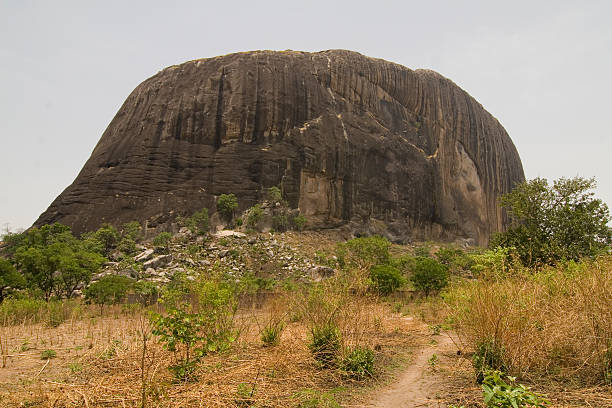
Guided walking tours around the base share Gbagyi folklore of protective spirits and healing powers. Photographers love sunrise and sunset light on the rock’s curves.
Access by taxi from Abuja’s city center (45 min). Local vendors sell crafts and refreshments at the parking lot.
11. Kajuru Castle, Kaduna State
Built between 1981–1989 by a German expatriate, this Turkish-style granite castle perches on a hilltop 45 km south of Kaduna . It boasts turrets, a dungeon, an armory, and the famed Dragon Tower.
You can stay overnight in one of 16 guest rooms, dine in medieval-themed halls, and wander gardens lit by torches at night. Book months ahead; visits are by appointment only .
Shuttle services run from Kaduna; pack insect repellent and a warm layer—nights can chill in the hills.
12. Aso Rock & Millennium Park, Abuja
Aso Rock is a 400 m granitic inselberg anchoring Nigeria’s seat of power—Presidential Complex and National Assembly sit at its base .
Across the river, Millennium Park spans 32 ha, featuring Italian-style gardens, fountains, and walking paths with Aso Rock views. Queen Elizabeth II opened it in 2003 .
Early-morning strolls reveal butterflies and birds; kiosks sell snacks. Admission is free—just show your ID at the gate.
READ ALSO: 15 Best Places To Hangout In Lekki In 2024
13. Jos Wildlife Park, Plateau State
Just 5 km from Jos city, this 8 km² park started in 1972 under NCF and houses elephants, lions, crocodiles, ostriches, and gazelles.
Trails wind through pine forests to Vongnifwel Hill (1,345 m), offering picnic spots and hilltop vistas. Camel rides and a small zoo round out the experience.
Affordable entry fees, snack stalls, and nearby Jos Museum make this a full-day outing for families and wildlife fans.
14. Mambilla Plateau, Taraba State
The plateau covers 9,389 km² at an average 1,600 m, with peaks like Chappal Waddi (2,419 m) . Cool temperatures (≤ 25 °C) and tea plantations give it a distinct highland vibe.
Scenic drives along escarpments lead to Gembu town markets, where you’ll find local honey and woven crafts. Camping under clear night skies is a must.
Roads can be rough; 4×4 transport and a local guide ensure safe passage. Pack warm clothes for mornings.
15. Chad Basin National Park, Borno/Yobe States
Covering 2,258 km² of Lake Chad’s southern basin, this park protects hippos, crocodiles, and wetland birds in desert-sahel transition zones.
Boat trips from Ngurmi or Berbera sectors glide through lagoons and fishing villages. Peak water levels in August–September attract migratory birds.
Security conditions vary—travel with a licensed operator and local guide. Bring high-SPF sunscreen and binoculars.
16. Kanta Museum, Argungu, Kebbi State
Kanta Museum occupies the 1831 emir’s palace in Argungu, named for Muhammad Kanta (1515). It became a museum in 1958, showcasing royal arms, charms, and drums that trace Kebbi’s history.
Eleven rooms display swords, spears, bows, and ancient records. Local guides explain ceremonies tied to each artifact.
Combine your visit with the March fishing festival—the same town that hosts 50,000 anglers also preserves its royal past here.
17. Hadejia-Nguru Wetlands, Yobe/Jigawa States
Once 3,000 km², seasonal floods now cover 900 km², creating lagoons and marshes in the Chad Basin. The site is Ramsar-protected and home to 377 waterbird species, peaking at 325,000 birds.
Local farmers, fishermen, and herders (1.5 million people) rely on flood-recession agriculture and fishing.
Boat safaris in August–September let you glide past reed islands and spot rare waders. Pack rain gear and a long-lens camera.
18. Kamuku National Park, Kaduna State
Covering 1,120 km², Kamuku’s Sudanian savanna hosts forest elephants, roan antelopes, baboons, and 192 bird species.
Explore Dogon Ruwa Waterfalls, climb the Goron Dutse inselberg, or roam the boulder fields of Tsaunin Rema, home to rock hyrax colonies.
The park is undeveloped—plan rustic camping, early-morning treks, and carry all supplies. Guides help you navigate unmarked trails.
19. Goronyo Dam, Sokoto State
The sand-fill dam on the Rima River stands 21 m high and 12.5 km long, creating a 976 million m³ reservoir since 1992 .
Its 200 km² lake is a popular picnic and boating spot. Locals fish year-round; sunrise and sunset bring calm waters perfect for photos .
Accessible via a 90 km drive northeast of Sokoto, the grounds have shaded kiosks. No entry fee—just pack snacks and a blanket.
20. Sir Lugard Empire Hill, Baro, Niger State
Rising 150 ft above Baro town, this hill marks the 1900 site of Nigeria’s first high-frequency radio station, linking colonial Lagos to London.
Stone foundations, staff-quarter ruins, and a small cemetery tell the story of early telecoms. Climb winding paths for vistas of the River Niger 15 km away.
Vendors sell cold drinks at the base; guided walks share tales of Frederick Lugard’s strategic outpost.
21. Shere Hills, Jos Plateau
At 1,776 m, Shere Hills are the Jos Plateau’s highest peaks and Nigeria’s third-tallest point.
Hiking trails range from easy strolls to rock-climbing routes. Local outfitters in Jos run group hikes showing granite tors, panoramic city views, and picnic spots.
Best in November–March for clear skies. Bring sturdy boots, snacks, and sun protection.
22. Gombe Stream National Park, Gombe State
Established in 1975, Gombe Stream covers 410 km² along the Gombe River. Jane Goodall’s chimpanzee research there made it world-famous.
Walking trails lead to habituated chimp troops, baboons, and colobus monkeys. Park lodges at Kasewe Camp offer cozy chalets near the action.
Morning and late-afternoon walks are best for wildlife; reserve guides in advance and pack binoculars.
23. Katsina Emir’s Palace & State Museum, Katsina State
The Gidan Korau Palace—home to Katsina’s Emir since the 14th century—is a living heritage site of mud-brick architecture.
Inside, the State Museum displays Hausa crafts, weapons, and historical documents, tracing Katsina’s role in trans-Saharan trade.
Daily tours (morning & afternoon) require modest entry fees. Combine with a visit to the nearby Korau Museum for deeper cultural context.
24. Arewa House, Kaduna State
Arewa House in Kaduna sits at No. 1 Rabah Road and was established in 1970 as the former residence of Sir Ahmadu Bello, the first Premier of Northern Nigeria. Today, it serves as a research centre and museum with a central hall and twelve galleries, showcasing manuscripts, photographs, and artifacts that trace the political and cultural history of Northern Nigeria. Visitors can explore rotating exhibitions, use the research library, and attend lectures or cultural events, making it a lively hub for history buffs and scholars alike.
25. Jos Museum, Plateau State
The Jos Museum, founded by archaeologist Bernard Fagg in 1952, stands as Nigeria’s first public museum and houses a rich collection of Nok terracotta figurines, metal works, wood carvings, and pottery. The museum complex also includes the Museum of Traditional Nigerian Architecture, displaying life-size replicas of structures like the Kano city walls and a Tiv village, offering hands-on insights into local building traditions. Though funding challenges have left parts in disrepair, guided tours and UNESCO-supported training programs keep Jos Museum lively, and its nearby zoo and Solomon Lar Amusement Park make the area a full-day family destination.
26. Hubbare (Shehu’s Tomb), Sokoto State
Hubbare, or Shehu’s Tomb, in Sokoto marks the final resting place of Usman dan Fodio, the 18th-century Islamic reformer and founder of the Sokoto Caliphate, and sits within a compound that includes his teaching house and family graves. Pilgrims and visitors pass through a foyer and corridor before reaching the dimly lit chamber where his grave lies beneath a black cloth inscribed with Arabic calligraphy, joined by the graves of his sons Hassan and Sambo.
The serene gardens and museum exhibits on the site offer context on his life, jihad, and legacy, while local guides share spiritual insights, making Hubbare both a place of reflection and history.
27. Farin Ruwa Falls, Nasarawa State
Farin Ruwa is one of Nigeria’s tallest waterfalls, plunging about 150 m off the Jos Plateau into lush gorges. It sits in Wamba LGA, Nasarawa State, roughly 120 km from Lafia and 192 km from Abuja.
The white-water curtain earned its Hausa name—“Farin Ruwa” means “white water.” After rains (March–November), the volume swells, creating misty rainbows and thunderous roar. Off-season (Dec–Feb), flows ease, letting you wade in calmer pools.
Plan a day trip by car via Keffi–Akwanga–Wamba (about 3¾ hrs). Entry is modest (around ₦500). Bring sturdy shoes, snacks, and waterproof bags. Locals offer guided hikes to lower campsites and stalls with cold drinks.
28. Mount Patti, Lokoja, Kogi State
Mount Patti towers 458 m above Lokoja, offering sweeping views where the Niger and Benue rivers meet in a “Y” shape. This is where journalist Flora Shaw coined “Nigeria” in 1897 as she gazed at the rivers below.
Trails wind past the Lord Lugard Rest House, first primary school (1865), and colonial relics. Hikers often start at dawn to catch sunrise light on the rivers and cityscape. Local guides point out native flora, baobab trees, and birdlife along the way.
Drive up on paved roads or trek the steeper northern route. Pack water, sunscreen, and a light jacket for breezy summit air. There’s no formal fee, but small donations keep the site maintained.
29. Confluence Beach, Lokoja, Kogi State
Where the Niger and Benue rivers converge, Confluence Beach spans a sandy shoreline with picnic spots, boat rides, and river cruises. The on-site Confluence Beach Hotel (est. 1999) offers lodging, dining, and water-sport rentals, driving local employment and income generation.
Field surveys show 54.6% of visitors agree the hotel boosted local tourism, while 47.7% say it created jobs for community members citeturn3search7. Boat tours at sunrise reveal fishermen casting nets, waterbirds, and riverbank villages.
Access via Lokoja city (no entry fee); informal stalls sell snacks and crafts. Best visits are in cooler months (Nov–Feb). Bring cash for vendors and negotiate boat-ride prices before you set off.
30. Taruga Archaeological Site, Nasarawa State
Taruga sits 60 km southeast of Abuja and is one of central Nigeria’s key Nok culture sites, where 600 BC terracotta figurines and early iron-smelting remains were first uncovered.
Excavations in the 1960s revealed iron slag dated to 600 BC, making it the earliest known iron-working site in sub-Saharan Africa. Potter’s rolls and stamped geometric designs on terracotta busts here influenced later Ife art traditions.
Today, you can walk guided paths through scrub savanna to exposed dig pits and scattered pottery shards. There’s no formal visitor center—plan a day trip from Lafia with a local archaeologist guide, and carry water and sun protection.
Conclusion
Northern Nigeria is a region bursting with beauty, culture, and adventure—far beyond what many expect. From the ancient walls of Kano to the serene hills of Mambilla Plateau, each destination tells a unique story and offers unforgettable experiences. Whether you’re drawn by history, nature, or the simple thrill of discovering somewhere new, the North truly has something for everyone.
So if you’ve been craving adventure or just want to see a different side of Nigeria, these 25 places are your perfect starting point. And hey, this list isn’t final—if you know a hidden gem that deserves a spot, feel free to drop it in the comments! Let’s keep exploring and celebrating the beauty that Northern Nigeria has to offer.
Related posts:
 Top 17 Fun Places To Hangout In Accra
 17 Best night clubs in Marina, Dubai To have the most fun
 25 Best Virtual Museum (Free and Paid) in 2023
 Things To Do In Cinque Terre (17 Vacation Ideas)
 Top 10 Incredible Places to Go in Asaba
 Top 12 Incredible Places to Go in Kano
 Places To Go Bowling In Lagos
 10 Best Places to Live in Lagos: Lekki, Victoria Island and More